
English| EUR
Suggested for you
More currencies
Choose a language
Narita Airport shares its name with a temple town whose main hall traces its founding to the year 940 — Naritasan Shinshoji (成田山新勝寺). This long layover in Narita what to do guide sets out what the town realistically offers a transit passenger, and where the time actually goes. It covers the temple precinct, the Omotesando approach, and the buffer travellers routinely underestimate.
Quick answer
Most travellers with hours to spare go to Naritasan Shinshoji at 1 Narita, Narita City, Chiba 286-0023, where entry to the temple grounds is free at 0 JPY and the grounds are open daily from 00:00 to 23:59. The recommended arrival window is 06:00–16:00, which avoids mid-day crowds and leaves light to explore. Immigration and re-check-in still need a buffer.
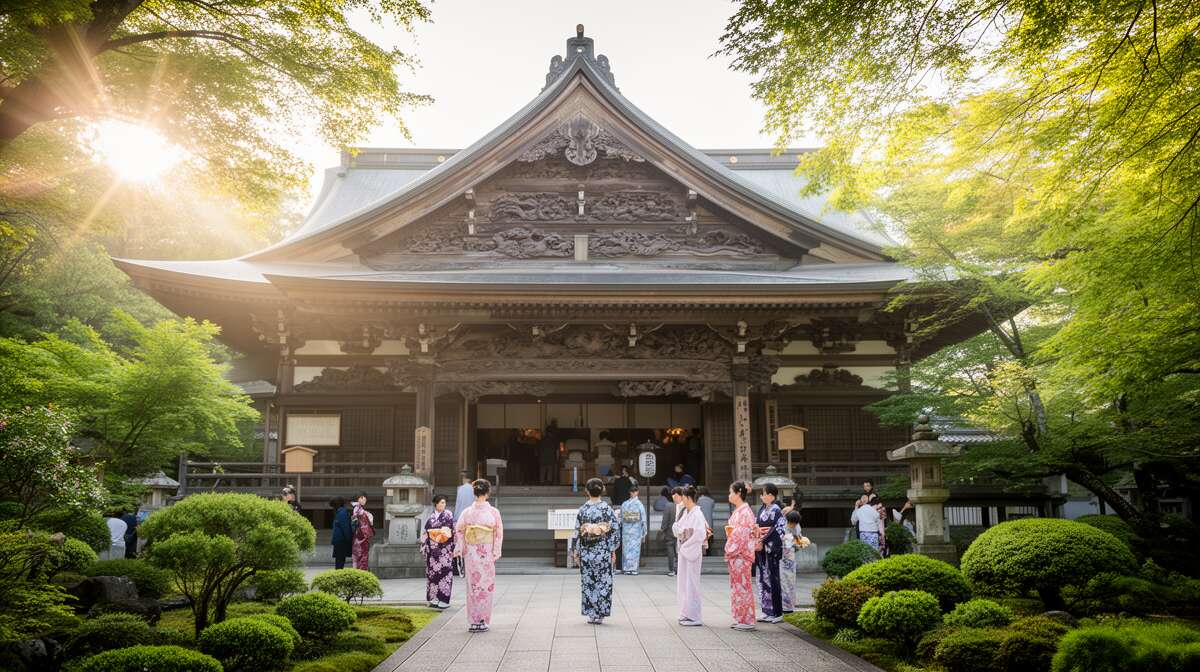
Naritasan Shinshoji has drawn pilgrims since 940, when a monk carried an image of Fudo Myoo east from Kyoto and installed it on a hillside in what was then farmland. The airport arrived in 1978. The result is a rare piece of geography: an international hub whose neighbour is a working Shingon temple complex, which is why the question of long layover in Narita what to do usually has one obvious answer rather than a dozen weak ones. Transit passengers face three constraints, and none of them are about the temple. Checked baggage may or may not follow through to the final flight. Re-entry through security and immigration takes an unpredictable slice of the afternoon. And the connection clock, not the sightseeing clock, decides everything. Travellers researching things to do near Narita Airport tend to overestimate the walking and underestimate the queueing. The town itself is forgiving: Naritasan Omotesando, the sloping approach street lined with unagi restaurants, wooden shopfronts and pickle sellers, runs downhill from the station straight to the Niomon Gate, so nobody navigates. What is not forgiving is the airport's own perimeter. Inside the precinct, the scale surprises people expecting a roadside shrine. The Great Main Hall stages the goma fire ritual several times a day, a ceremony in which cedar sticks are burned before the Fudo Myoo image. Behind it, stone steps climb past the Great Pagoda of Peace into Naritasan Park, a wooded garden of ponds, plum trees and a calligraphy museum that most transit visitors never reach. Free access to the grounds means there is no ticket queue to plan around; the constraint is daylight and legs, not admission. Anyone planning a Narita airport layover tour should therefore work backwards from the boarding gate rather than forwards from the arrival hall, and treat the temple as the anchor with everything else optional. Read as a practical brief, long layover in Narita what to do reduces to one calculation: subtract the return journey and the airport buffer from the gap between flights, then spend what remains on the hill. Hours, costs and sequencing are set out in the sections below.
“The connection clock, not the sightseeing clock, decides everything.”
This plan suits travellers with a layover of roughly eight hours or more at Narita Airport, leaving about six hours on the ground once immigration, baggage storage and return buffers are accounted for. It covers Naritasan Shinshoji Temple and the Omotesando approach on foot, at an unhurried pace.
Pass through immigration, leave cabin bags in a coin locker or baggage counter, and allow 45–60 minutes before you are actually moving toward town. Aim to be leaving the terminal well inside the 06:00–16:00 arrival window.
Begin at the top of the Omotesando street, which slopes gently downhill for about 800 metres toward the temple. Walking it end to end takes 15 minutes without stops, or 40 with browsing.
Enter the grounds through the Somon gate, then descend the stone steps to the Niomon gate with its large red lantern. Budget 20 minutes; the steps are uneven, so flat shoes help.
Spend 45 minutes at the Daihondo, the Three-Storied Pagoda and the Shakado hall. The incense burner in front of the main hall is the busiest spot, so photograph it first.
Walk the loop past the ponds, waterfall and the Great Pagoda of Peace at the rear of the grounds. Allow an hour; the far end is roughly 10 minutes from the main hall.
Pause for a sit-down meal or a rest before the return walk. Keep this to an hour so the schedule holds.
The return leg is uphill and takes noticeably longer than the descent, so add 10 minutes over your outbound time.
Head back with at least three hours before departure to cover retrieving bags, check-in and security. Confirm your terminal before boarding any transport.
The temple grounds at Naritasan Shinshoji remain open to visitors throughout the entire week. Travelers with long layovers can access the site at any time of day.
Admission to the Naritasan Shinshoji Temple grounds is provided at no cost to all visitors. Expenses during your visit are limited to independent choices such as local transport, dining, or optional donations.
Verdict: A typical adult pays 0 JPY for entry, with total costs depending solely on personal expenditures for food and transit.
Naritasan Shinshoji Temple is located in Narita City, accessible via a short transit connection from Narita Airport. The most efficient approach for layover travelers is by train to the JR Narita Station or Keisei Narita Station.
JR Narita Line from Narita Airport Terminal 1 or 2·3 to JR Narita Station
Keisei Main Line from Narita Airport Terminal 1 or 2·3 to Keisei Narita Station
Via Higashi-Kanto Expressway or Route 295
Upon arrival at either JR or Keisei Narita Station, follow the signs for the Omotesando approach; the temple grounds are a 10 to 15-minute walk from the stations.
The approach to Naritasan Shinshoji Temple, known as Omotesando, offers numerous traditional dining options ranging from quick street snacks to sit-down meals. Visitors can explore these establishments along the historic path before or after visiting the temple grounds.
restaurant
Located on the main Omotesando approach, this long-standing establishment specializes in unagi, or freshwater eel. It provides a traditional dining environment for those seeking a substantial meal.
café
Situated on the approach, this shop features dairy products and soft-serve ice cream sourced from a local farm. It is a convenient stop for a quick refreshment.
street
Various vendors lining the path to the temple sell roasted chestnuts, rice crackers, and sweet dango. These stalls offer a practical way to sample local snacks while walking.
restaurant
Found along the main street, this casual spot serves various Japanese set meals including soba and tempura. It offers a more relaxed pace compared to larger tourist venues.
Everything you need to know about long layover in narita what to do
A popular option for travelers is visiting the historic Naritasan Shinshoji Temple, which is easily accessible from the airport. Exploring the temple grounds and the surrounding Omotesando street provides a cultural experience that fits well within a transit schedule.
Yes, many travelers participate in a local Narita temple sightseeing excursion to navigate the area efficiently. These guided experiences help ensure you return to the airport in time for your onward flight.
Yes, the temple is a prime location for those researching a long layover in narita what to do as it is close to the airport. You can walk through the park and view the traditional architecture within a few hours.
The temple grounds are open daily from 00:00 to 23:59. This constant access makes it a convenient stop regardless of your specific flight arrival time.
There is 0 JPY entrance fee for the temple grounds, meaning you can explore the site at no cost. This makes the temple an accessible cultural highlight for any visitor.
To ensure a smooth visit, prioritize transport time to and from the airport to avoid missing your connection. You should allow enough time to navigate the temple grounds and reach the terminal before boarding commences.
The best arrival window is 06:00 to 16:00 to avoid mid-day crowds and ensure sufficient daylight to explore the grounds. This window helps you balance your transit needs while enjoying the local landmarks.